
Electrical Engineering Courses Nearby — Real Options, Pay, and How to Apply
Electrician careers continue to grow in demand across the United States, driven by construction, infrastructure upgrades, renewable energy installations, and general maintenance work. According to federal employment projections, electrician jobs are expected to grow faster than the national average for all occupations — about 9 % over the coming decade, reflecting strong ongoing demand.
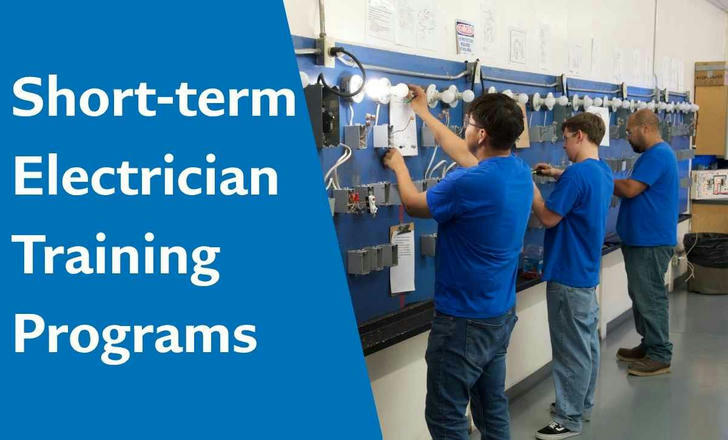
For people interested in entering this field without a traditional four-year degree, practical training programs and career academies provide a clear path. These programs help learners gain the technical skills, certifications, and hands-on experience required to start work in electrical trade roles ranging from apprentices to journeyman technicians.
🔹 What this program actually is — quick overview
Southern Trade School positions the Electrical Technician course as a career-prep certification that readies learners to start as apprentices and build toward role-level competence as electrical technicians. The program emphasizes immersive, simulation-based practice alongside conventional instruction.
🔹 What students learn (day-to-day duties reflected in the curriculum)
The site lists typical electrical technician duties that the training targets, including: system installation, routine maintenance, troubleshooting and repairs, reading blueprints, upgrading systems, and client communication. These tasks form the practical core of the course exercises and simulations.
🔹 Course format, duration, and delivery
Total course hours: 65.
Estimated completion time: flexible; learners who commit about 20 hours per week can complete in roughly 3 weeks, while a 10-hour weekly pace typically spans about 5 weeks. Access to course materials is available for up to 12 months.
Schedule: coursework is available 24/7 to support self-directed study and flexible pacing.
Instruction combines self-directed lessons, skill demonstrations, quizzes, and simulation-driven practice designed to reinforce hands-on competencies.
🔹 Immersive VR training — what that means in practice
Southern Trade School highlights immersive VR scenarios that let learners explore real-world electrical tasks in safe, simulated environments. The program describes unlimited hands-on practice in 3D simulations to build confidence before applying skills on actual job sites. This VR component is presented as a central learning tool in the curriculum.
🔹 Certifications and readiness
Upon successful completion, students receive an Electrician Career Prep Professional Certificate of Completion and are prepared to sit for the OSHA 10-Hour Construction Industry certification. The program is framed as preparation for apprenticeship entry rather than a substitute for multi-year journeyman training.
🔹 Who this program fits
- Individuals seeking a short, focused pathway into electrical work and apprenticeships.
- Learners who require schedule flexibility and benefit from simulation-based practice.
- Candidates looking for a structured introduction to electrical tasks before pursuing on-the-job training.
🔹 Guidance by Age Group
Electrical technician training can be approached differently depending on life stage, work experience, and long-term goals. The table below outlines practical considerations for learners at different ages, based on common training and apprenticeship pathways.
| Age Range | Typical Goals | Recommended Focus | Practical Considerations |
|---|---|---|---|
| 18–24 | Enter a skilled trade | Build foundational electrical knowledge | Program can serve as preparation for apprenticeships or further hands-on training |
| 25–34 | Increase income stability | Develop job-ready technical skills | Flexible pacing helps balance work, study, or family commitments |
| 35–44 | Career transition or upskilling | Strengthen troubleshooting and system understanding | Simulation-based learning can reduce the barrier to entry for career changers |
| 45–54 | Long-term skill development | Emphasize safety standards and core competencies | Structured coursework supports gradual, consistent learning |
| 55+ | Practical skill acquisition | Focus on fundamentals and safe work practices | Self-paced study can reduce physical strain while building technical confidence |
Age alone does not determine suitability for electrical work. Aligning training pace, learning format, and career expectations with personal circumstances is often more important than starting age.

🔹 How to apply and next steps
Review program pages and the admissions sections on Southern Trade School’s site for tuition, financing, and any WIOA or student financing options.
Use the site contact form or the “I’m Ready” / contact option to request enrollment details and start dates.
For direct assistance, the site provides phone and office contact information (Southern Trade School, Brentwood, TN — phone listed on the program page).
🔹 Practical questions to confirm before enrolling
Does the course schedule and pacing match personal availability? (materials are available 24/7).
Which certifications are included or prepared for (OSHA 10 is specifically noted)?
How will the VR simulations map to local apprenticeship expectations or employer requirements? (ask career services or admissions).
🔹 Bottom line
Southern Trade School’s Electrical Technician program is a condensed, simulation-driven option for learners seeking a rapid, skills-focused entry into electrical work and apprenticeship pathways. The course emphasizes hands-on VR practice, flexible pacing (3–5 weeks at full or part-time intensity), and preparation for OSHA 10 certification — all described on the program page. Prospective applicants should contact Southern Trade School directly for tuition, financing, and enrollment details.