
2-Week Online CNA Classes: A Practical Route into the U.S. Healthcare Workforce
Entering the healthcare field can feel overwhelming for individuals who lack prior medical training or the time required for long academic programs. Many aspiring healthcare workers face the same obstacles: limited flexibility, delayed entry into employment, and uncertainty about which credentials actually lead to patient-care roles. For those seeking a faster and structured path, 2-week CNA classes offered in hybrid online formats have emerged as a realistic option.
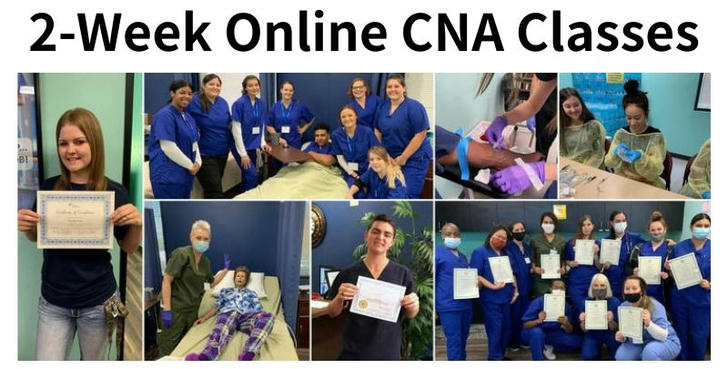
🔹 Why Choose a 2-Week Online CNA Program
🔹 Flexible Learning Structure
Accelerated CNA programs combine online coursework with required in-person clinical training. This model allows participants to complete theoretical lessons remotely while gaining hands-on experience in approved healthcare facilities close to home. The format is commonly used to support learners who must balance education with work or family responsibilities.
🔹 Accelerated Pathway to Certification
By condensing coursework into an intensive schedule, these programs enable eligible students to complete required instruction within a short timeframe. Upon completion, graduates may proceed to the state CNA competency exam, which is required for employment.
🔹 Focused, Job-Relevant Training
CNA programs emphasize essential patient-care competencies aligned with state guidelines. Training focuses on daily clinical tasks that CNAs perform in hospitals, nursing homes, rehabilitation centers, and long-term care facilities.
🔹 What Is Covered in a 2-Week CNA Program
Most accelerated CNA programs include approximately 80–100 hours of combined instruction and clinical practice. Core areas of study typically include:
Basic patient care and safety procedures
Measurement of vital signs
Assistance with personal care and mobility
Infection prevention and control
Emergency response fundamentals
Professional communication in healthcare settings
Clinical hours are mandatory and must be completed under supervision in licensed healthcare environments.
Who Can Benefit From These Programs?
| Age Group | Potential Benefit |
|---|---|
| 16–25 | Early exposure to healthcare careers |
| 26–35 | Transition into a stable care profession |
| 36–50 | Career change without extended schooling |
| 50+ | Entry into a service-oriented second career |
Healthcare facilities across the U.S. continue to rely on CNAs to support patient care teams, creating consistent demand for trained assistants.

🔹 Scheduling Options
To accommodate different availability needs, many providers offer multiple schedules:
Daytime accelerated tracks
Evening or weekend options
Hybrid formats with online theory and scheduled clinical sessions
The exact structure depends on the training provider and state regulations.
🔹 Who Can Benefit from These Programs
2-week CNA classes are often suitable for:
Adults seeking entry-level healthcare roles
Career changers transitioning into patient care
Students planning future advancement into nursing or allied health fields
Individuals prepared for intensive short-term study
Because of the physical and emotional demands of patient care, readiness for clinical environments is essential.
🔹 Case Studies
Case 1: Amanda K., Georgia
Amanda transitioned from administrative work into healthcare by enrolling in a hybrid CNA program in Georgia. The online coursework allowed completion of theory modules efficiently, while in-person clinical sessions provided hands-on patient-care experience. After completing the program, Amanda became eligible for the state certification exam and began applying for long-term care positions.
Case 2: Luis R., Texas
Luis enrolled in an accelerated CNA program while preparing for a future nursing pathway. The hybrid format allowed structured clinical exposure alongside online instruction. The experience helped Luis build foundational healthcare skills and confirm long-term career goals within the medical field.
🔹 How to Prepare for Enrollment
Before applying, prospective students are advised to:
Verify state-approved CNA programs
Confirm eligibility for the state certification exam
Prepare required documentation, such as identification and health clearances
Plan time commitments carefully due to the accelerated pace
Common admission requirements include minimum age criteria, background screening, and health documentation.
🔹 Frequently Asked Questions
Do online CNA programs include hands-on training? Yes. All CNA programs require in-person clinical training, regardless of online components.
Does completing the program guarantee certification? Program completion allows eligibility for the state certification exam, which must be passed to become certified.
What is the minimum age to enroll? Most states allow enrollment starting between ages 16 and 18, depending on local regulations.
🔹 Final Overview
2-week online CNA classes provide a structured and efficient pathway into the U.S. healthcare workforce. While the pace is demanding, the hybrid format ensures that both theoretical knowledge and clinical skills are developed in alignment with state standards. For individuals prepared to commit to an intensive schedule, this training model offers a practical entry point into patient-care roles and future healthcare advancement.