
A Fast Track to Becoming a CNA: 5-Week Training, Certification-Earn While You Learn Program
Entering the healthcare field as a Certified Nursing Assistant (CNA) is one of the fastest ways to begin a meaningful and stable career in the United States. With the growing needs of aging populations and expanding healthcare services, CNAs are in high demand across hospitals, nursing homes, assisted living facilities, rehabilitation centers, and home care agencies. A 5-week accelerated training program offers a practical and efficient path — allowing you to earn while you learn and begin your healthcare career without years of schooling.
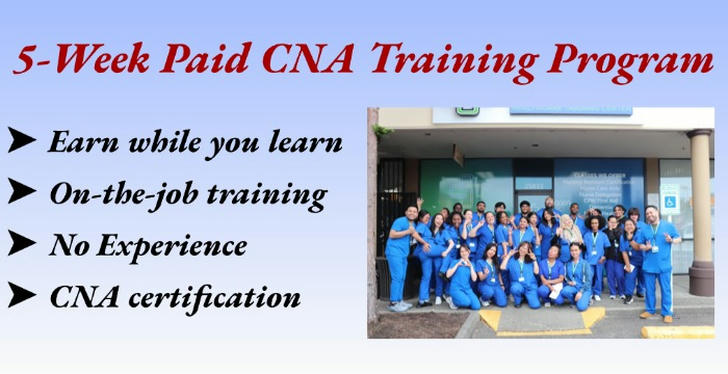
5-Week paid CNA Training Program
Program Type: Paid CNA training program
Tuition fees: Employer funding
Training duration: 5 weeks
Target Applicants: Beginners / No Experience
Hourly Pay Range: Typically $18.00-19.25 per hour
Certification: CNA certification
What Is a 5-Week CNA Training Program?
A 5-week CNA training program combines classroom instruction with hands-on clinical experience. These programs are designed to meet minimum state requirements for CNA education and prepare students for the state certification exam. In many “earn while you learn” versions of this program, students receive wages while completing their training, gaining valuable workplace experience alongside formal instruction.
In addition to classroom work, students spend significant time in clinical settings under supervision, applying what they learn in real care environments. This early clinical exposure accelerates both skill development and confidence.
A 5-week paid CNA training program is especially suitable for the following groups:
Career changers who want to move into healthcare quickly and start earning without long-term schooling.
Newcomers or immigrants seeking a recognized U.S. healthcare credential and stable employment.
Job seekers needing immediate income, since paid training allows participants to earn while learning.
Individuals planning to advance to LPN, RN, or other **nursing roles **and want an entry-level foundation.
How to Apply for a 5-Week Paid CNA Training Program?
Meet eligibility requirements such as age, work authorization, and background checks.
Apply to an employer-sponsored or state-approved program offering paid CNA training.
Complete the application and interview, if required.
Finish onboarding and health screenings before starting the program.
How to Get CNA Certified Faster?
If your goal is to become certified as quickly as possible, here are several strategies:
Choose Accelerated or Employer-Sponsored Programs
Programs like the 5-week “earn while you learn” model allow students to complete training fast while earning a wage. Many long-term care facilities and hospitals sponsor CNA training and provide employment after certification.
Ensure Your Program Meets State Requirements
Always confirm that your CNA course is approved by your state’s nursing board. Only approved programs make you eligible for the certification exam.
Make full use of federal and state regulations
In some cases, federal reimbursement regulations require retirement homes to provide training and testing when hiring staff. This can reduce upfront costs and shorten your certification process.
Career Opportunities and Future Growth
Once you earn your CNA certification, you open the door to a variety of healthcare settings. CNAs primarily assist patients with daily living tasks like bathing, dressing, mobility, and monitoring vital signs, working under the supervision of licensed nurses and healthcare professionals.
According to the U.S. Bureau of Labor Statistics (BLS), employment for nursing assistants is projected to grow over the next decade, driven by rising demand for long-term care and hospital services as the population ages. While growth rates may vary by location and facility type, the overall outlook remains positive relative to many other job categories.
In terms of earnings, CNAs generally make an entry-level wage, but in many areas the pay is competitive for roles that require minimal education and fast certification. Median annual salaries are often in a stable range, and higher pay can be found in certain hospitals, government facilities, or high-cost regions.